Hit by a Food Delivery Driver? Who's Actually on the Hook
By Leon Dacbert
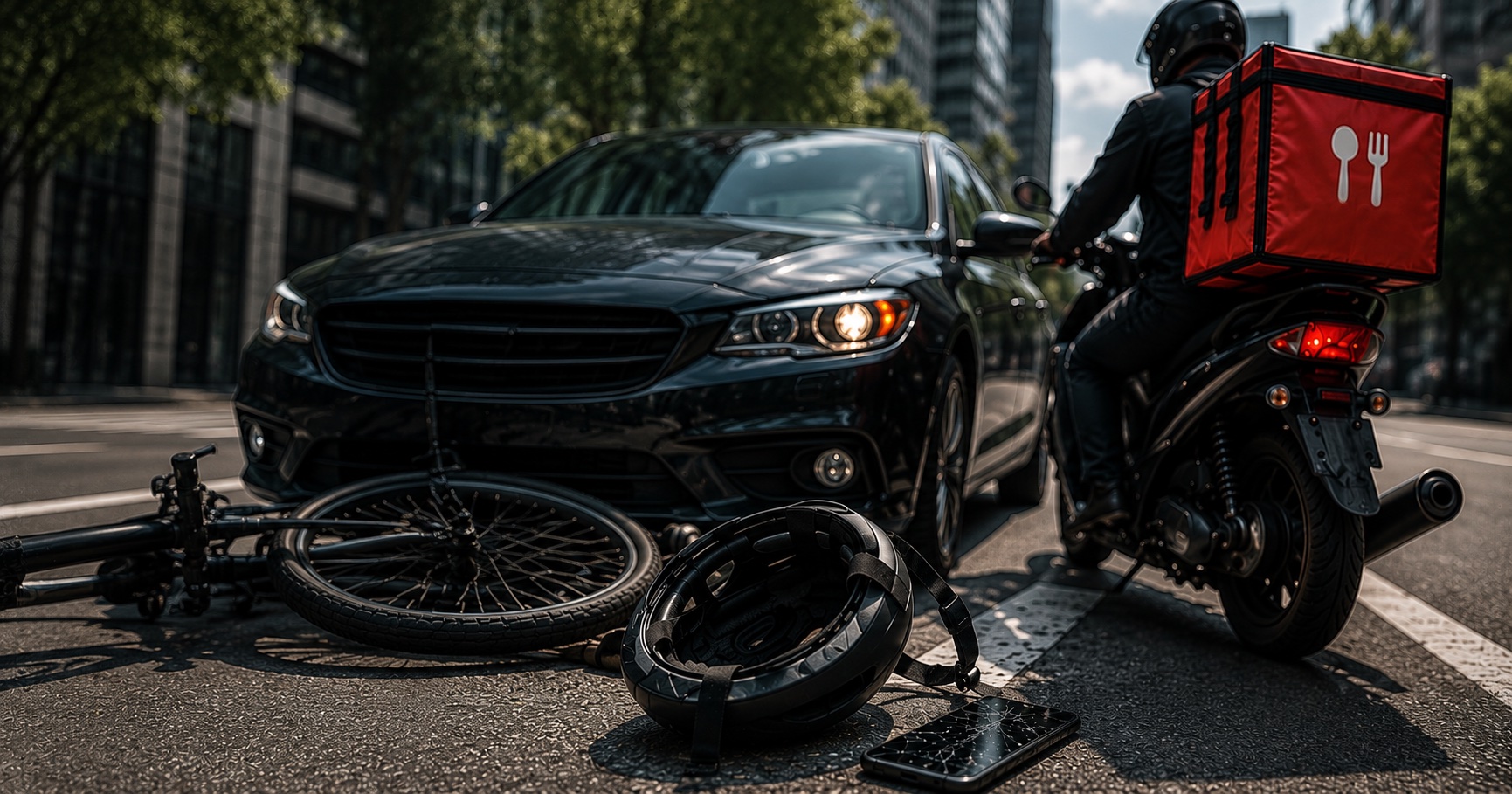
You're stopped at a red light. The car behind you has a glowing sign on the dash and a hot bag on the front seat -- somebody mid-delivery, eyes on the app instead of the road. Then they hit you.
So who pays your medical bills? You'd think that's a simple question.
It's not.
I worked on a case where a delivery driver crashed into my client and caused real injuries. On the surface it looked like any other rear-end crash. But once we started digging, it got a lot more complicated. And that complication is exactly what decided who we could go after.
Employee or App Driver? That's the First Question
The first thing I need to know is who the driver actually works for. There are two very different setups, and they don't pay out the same way.
- A restaurant's own driver -- think the local pizza place, or a chain that hires its own drivers. This person is usually an employee.
- A gig app driver -- DoorDash, Uber Eats, Grubhub. This person is almost always an independent contractor, not an employee.
Why does that matter so much? Because of an old legal rule.
Why "Who They Work For" Decides Who Pays
Texas follows a rule called "respondeat superior" -- a fancy way of saying an employer can be on the hook for what its employee does on the job. The Texas Supreme Court boils it down to two questions: was the person actually an employee, and were they doing their job when the crash happened?
So if the driver is a restaurant's employee, out making a delivery when they hit you, the restaurant can be responsible too. That matters, because a business usually carries a lot more insurance than an individual driver. That's a much bigger pocket.
But flip it to a gig driver and the picture changes. As a general rule in Texas, a company isn't responsible for the acts of a true independent contractor. The apps build their whole model around that line -- the driver uses their own car, sets their own hours, takes the jobs they want. So you usually can't go after DoorDash the way you'd go after a pizza shop that employs its drivers.
What About the Driver's Own Insurance?
Here's the part that catches people off guard. The driver's personal auto policy may not cover this crash at all.
Almost every standard personal policy has what's called a delivery exclusion -- it won't pay for crashes that happen while the car is being used to deliver for money. (I don't make the rules -- the insurance companies wrote that one.) So the driver's own insurer may just deny the claim.
That's where the app's coverage can come in, but only sometimes. Most of the big delivery apps carry a commercial liability policy that kicks in while the driver is on an active delivery, sometimes up to $1 million. App on but no order accepted yet? That coverage is usually much thinner, or gone. The exact rules change by company and change over time, so don't assume.
Is This Just a Rideshare Case?
Close, but no. I've written before about Uber and Lyft crashes, where coverage turns on which "phase" the driver was in. Food delivery runs on a similar idea, but the policies, the limits, and the gaps are different. And the driver might be juggling two or three apps at once. That's why I don't guess. I find out exactly who the driver was delivering for, what app was running, and whether they were on an active order when they hit you.
If a delivery driver hurt you, don't let an adjuster talk you into thinking it's a simple fender-bender. Give me a call and I'll help you figure out who's actually on the hook.
Need Legal Help?
If you've been injured and have questions, I'm here to help. Contact me for a free consultation.